



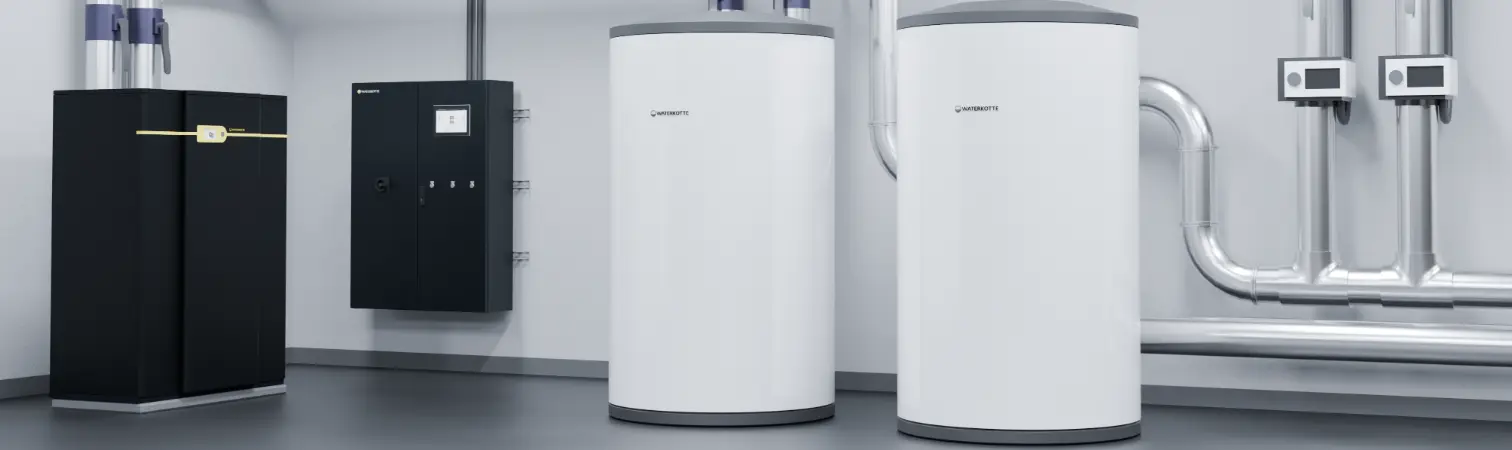
Building automation for modern heat pump systems
Building automation plays a central role in the efficient and reliable provision of heating, cooling, and hot water. Especially in complex buildings with different uses—such as production halls, office spaces, or mixed-use properties—it enables integrated and demand-oriented control of all energy flows. Modern heat pump systems only reach their full potential through automated system controls that intelligently link sources, storage, consumers, and operating modes.

Why is the connected control system of the heat pump so important?
Particularly high added value is created when building automation integrates active and passive cooling, heating, and hot water production. In complex systems, heat pumps work with various storage components, such as two heating storage tanks and a separate cooling storage tank. Automation enables:
- simultaneous heating and cooling,
- temperature shifts between storage tanks,
- passive cooling via ground or solar absorbers,
- active cooling as a by-product of heating operation.
For example, the cooling storage tank becomes the source, while the temperature level is specifically lowered by operating the heat pump. The resulting cooling capacity is a by-product of heat generation, an energetic synergy effect that leads to an optimal system COP and high comfort quality.
Advantages of building automation
The control system determines the current heating or cooling requirements of the building. This is the prerequisite for supplying the appropriate heating or cooling energy to buffer storage tanks. The most effective operating conditions are always maintained. WATERKOTTE's modern heat pump control system enables different operating conditions to be implemented with maximum efficiency:
- energy sources are used efficiently,
- storage systems are intelligently layered and prioritized,
- operating modes are coordinated,
- peak loads are avoided, and
- energy consumption is displayed transparently.
Sensible integration and networking of the heat pump into the building automation system not only saves costs and energy, but also significantly increases operational reliability and user-friendliness. Systems independently detect requirements, coordinate heat and cooling generation in the background, and respond flexibly to requirements.
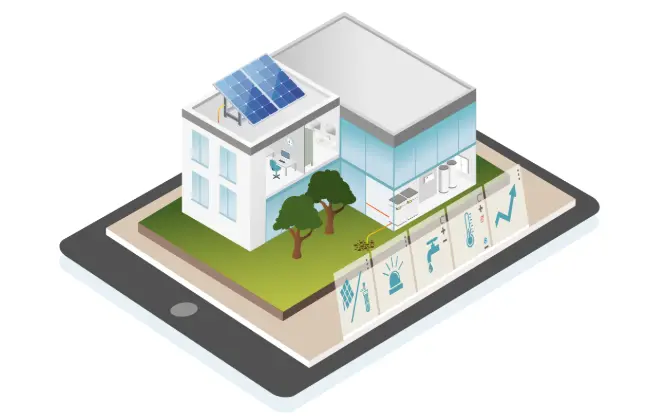
Everything from a single source—everything at a glance
WATERKOTTE offers solutions from a single source to ensure maximum system efficiency and operational reliability through comprehensive, integrated, and automated control of technical building equipment. In addition to the heating/cooling system, our scope of supply includes control concepts for every plant size and serveral system requirements. Our visualization system offers you a comprehensive overview and control options ranging from heat source and alarm management to hot water and temperature control.
Contact us
We would be happy to advise you personally on suitable products, system design, and available subsidies.